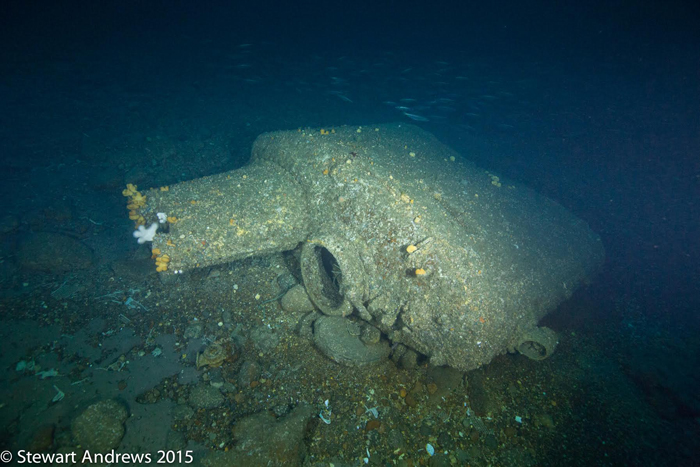
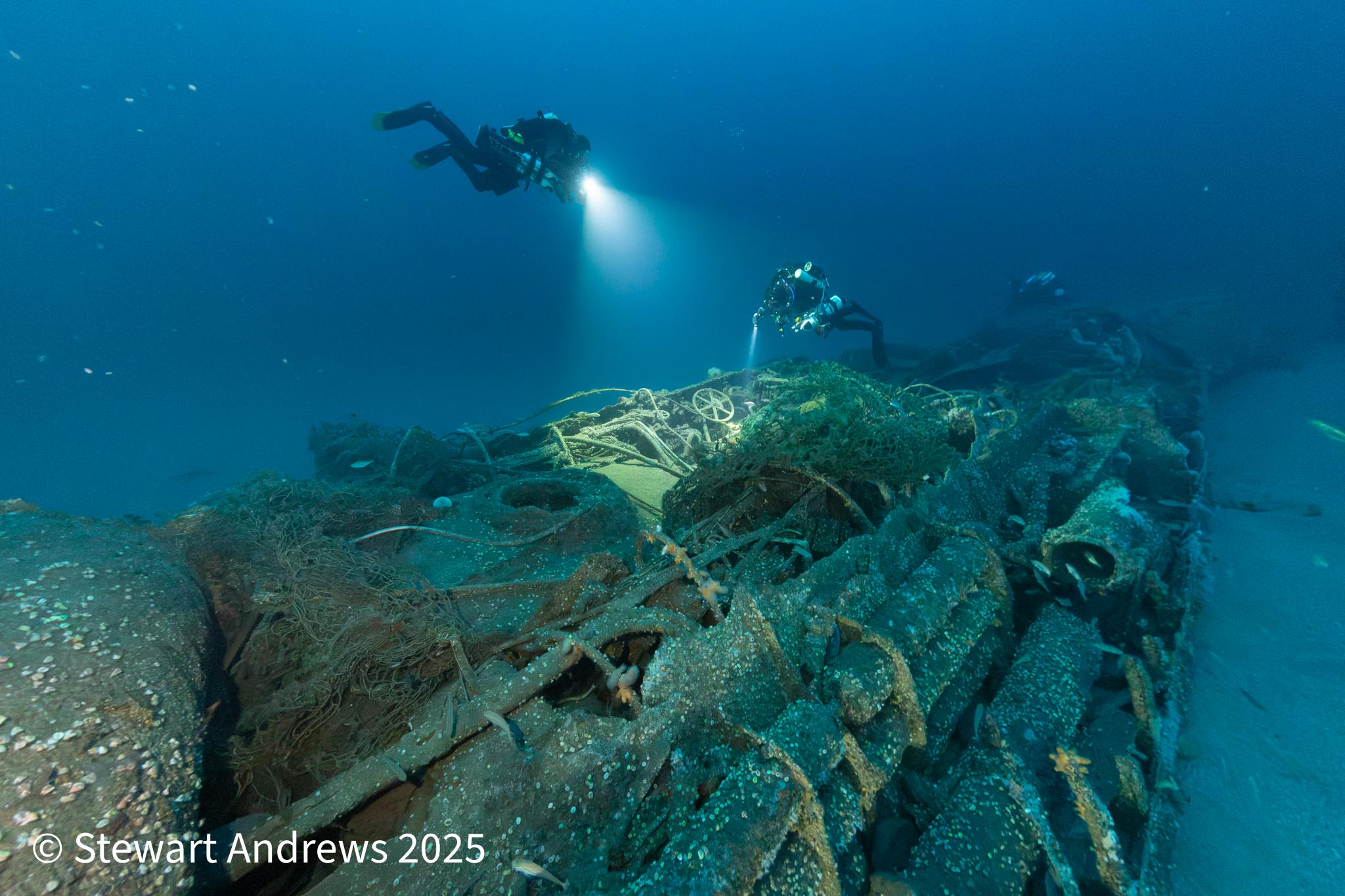
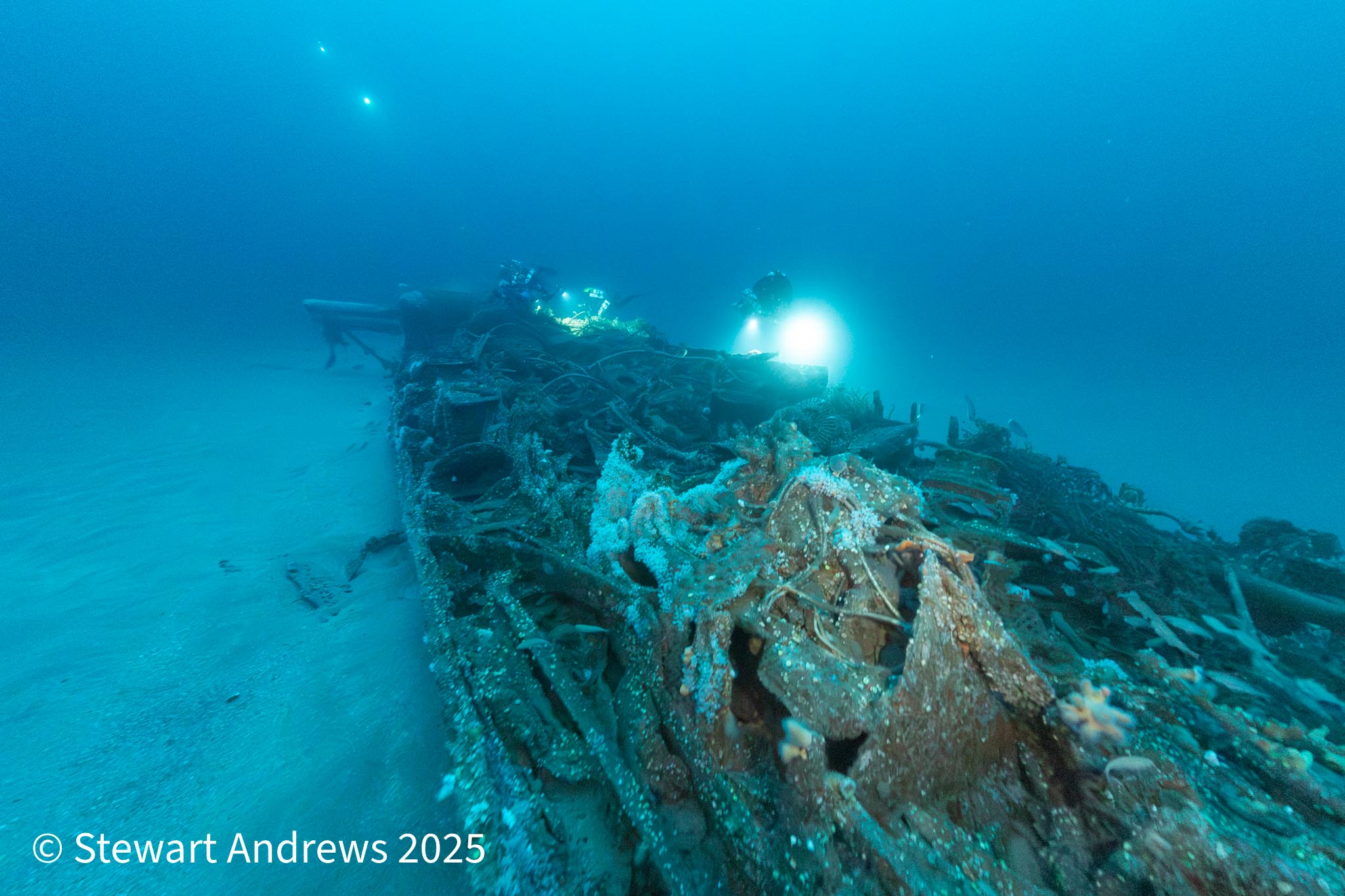
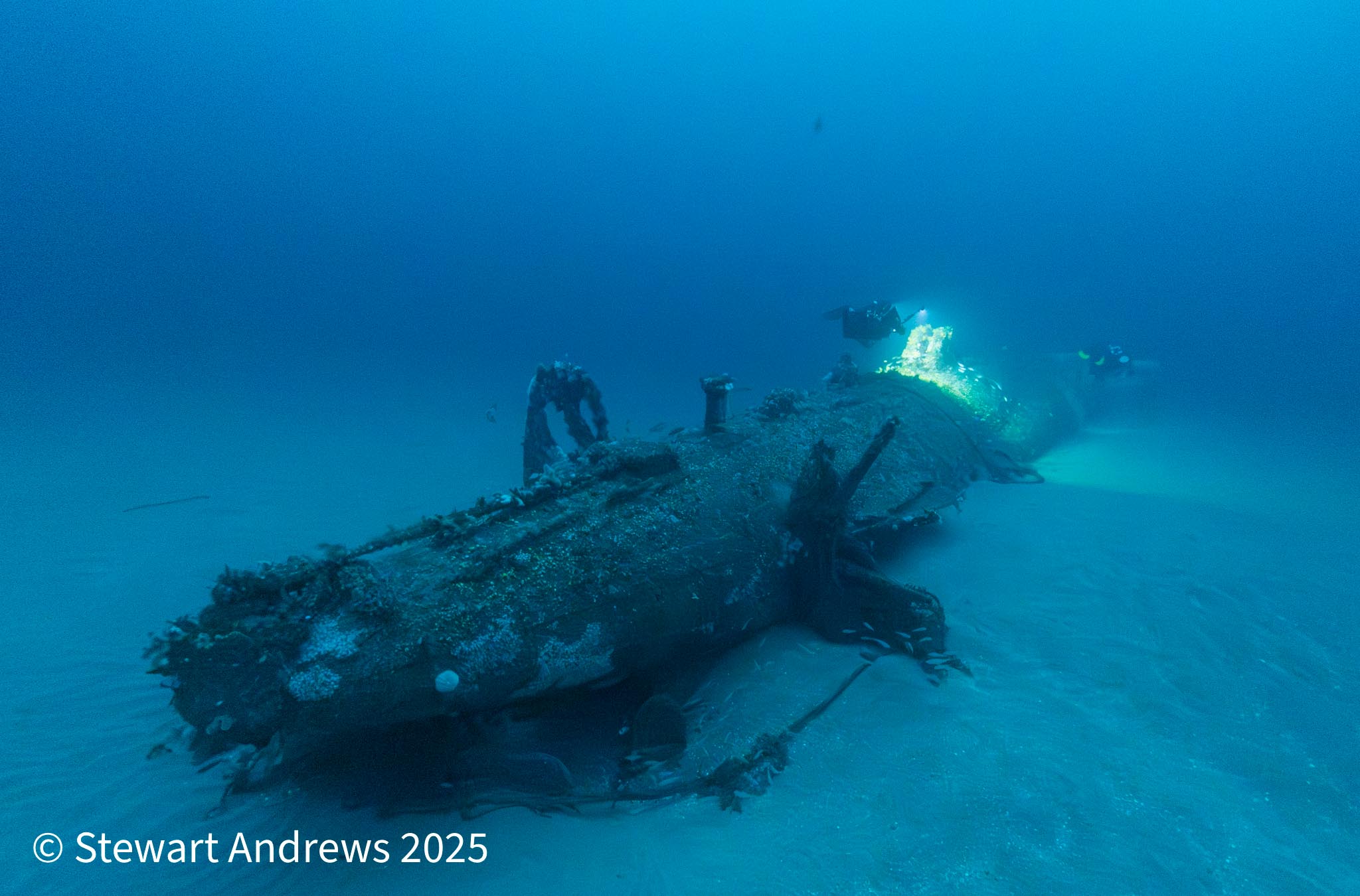
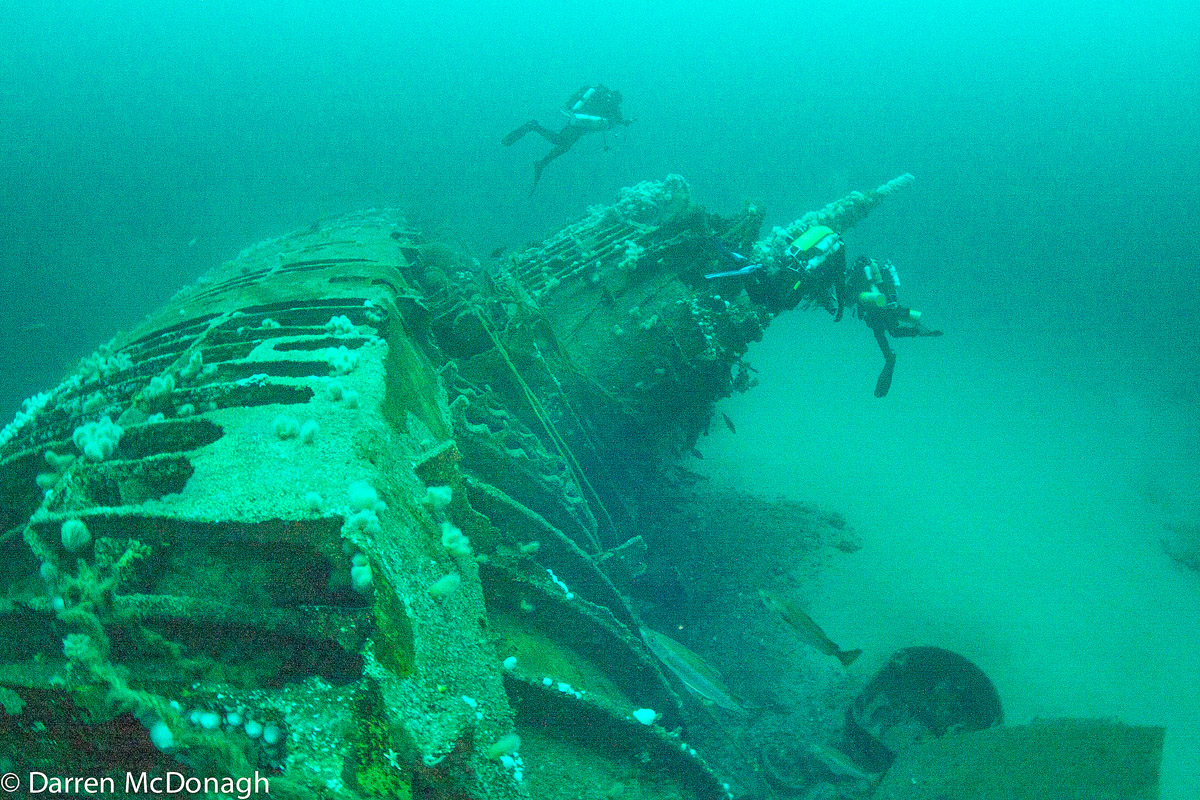
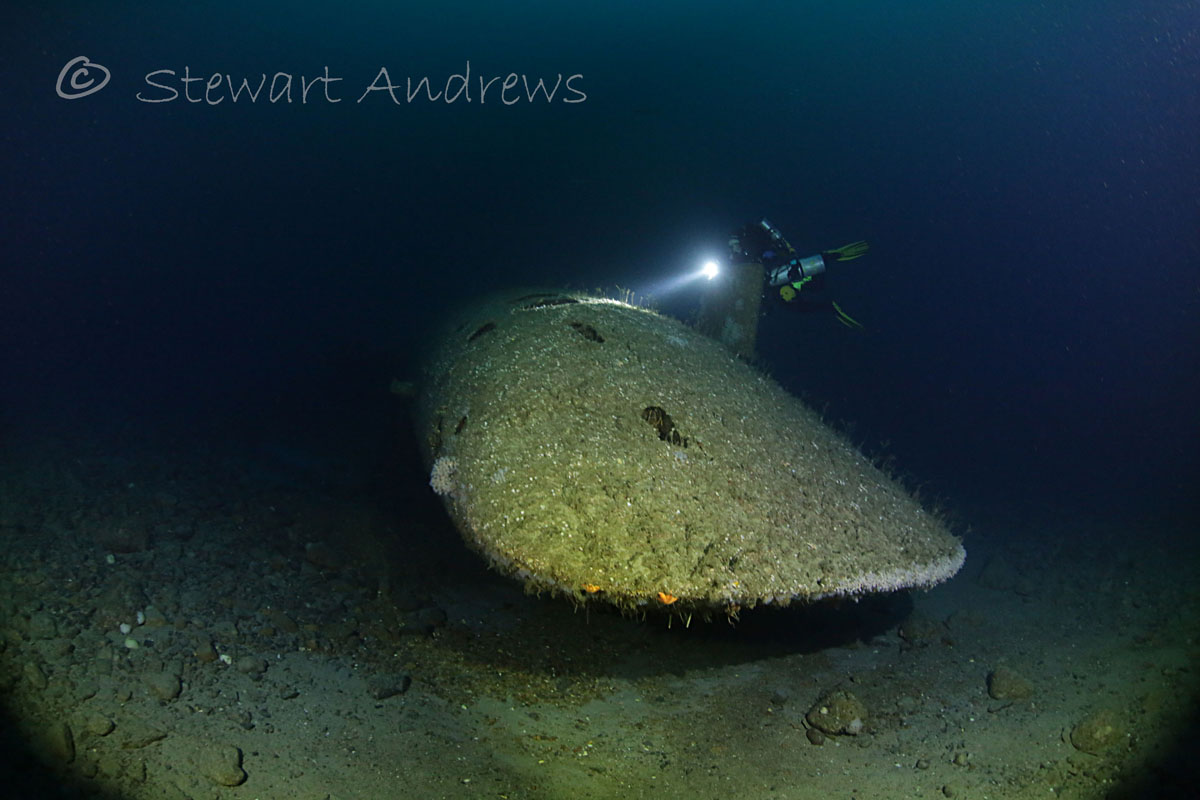
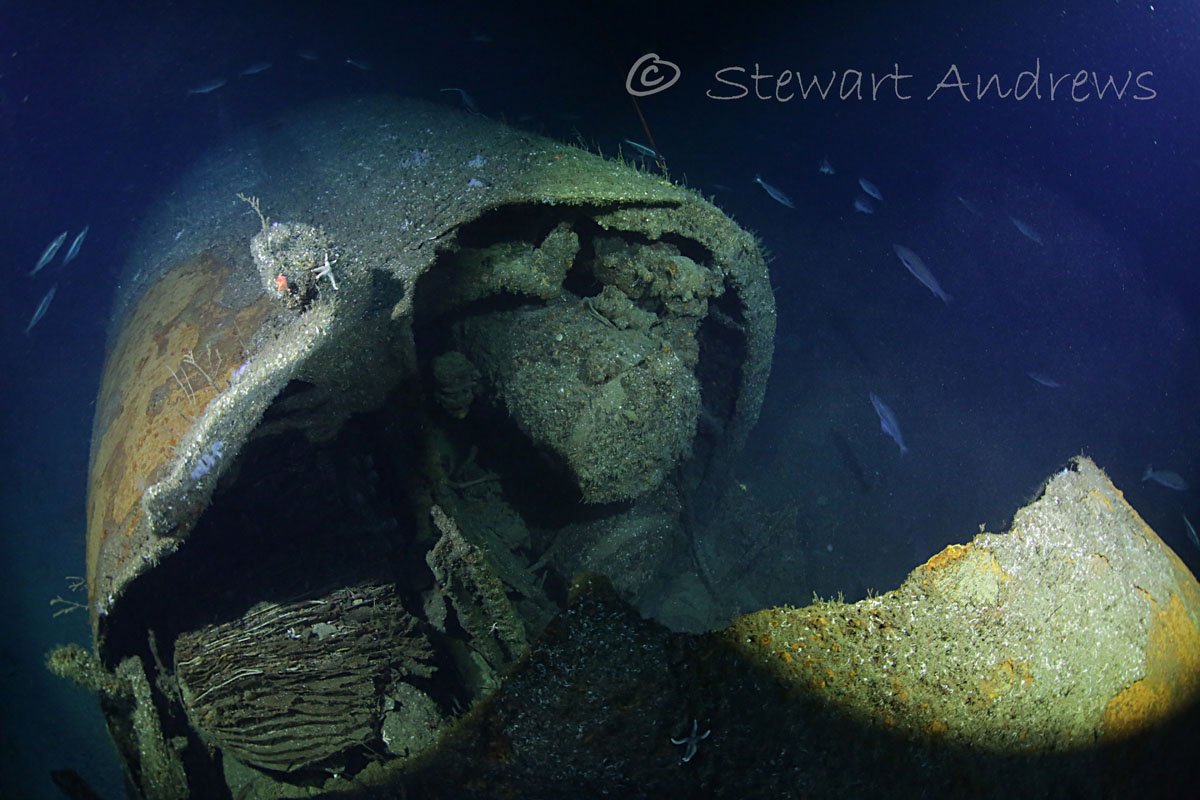
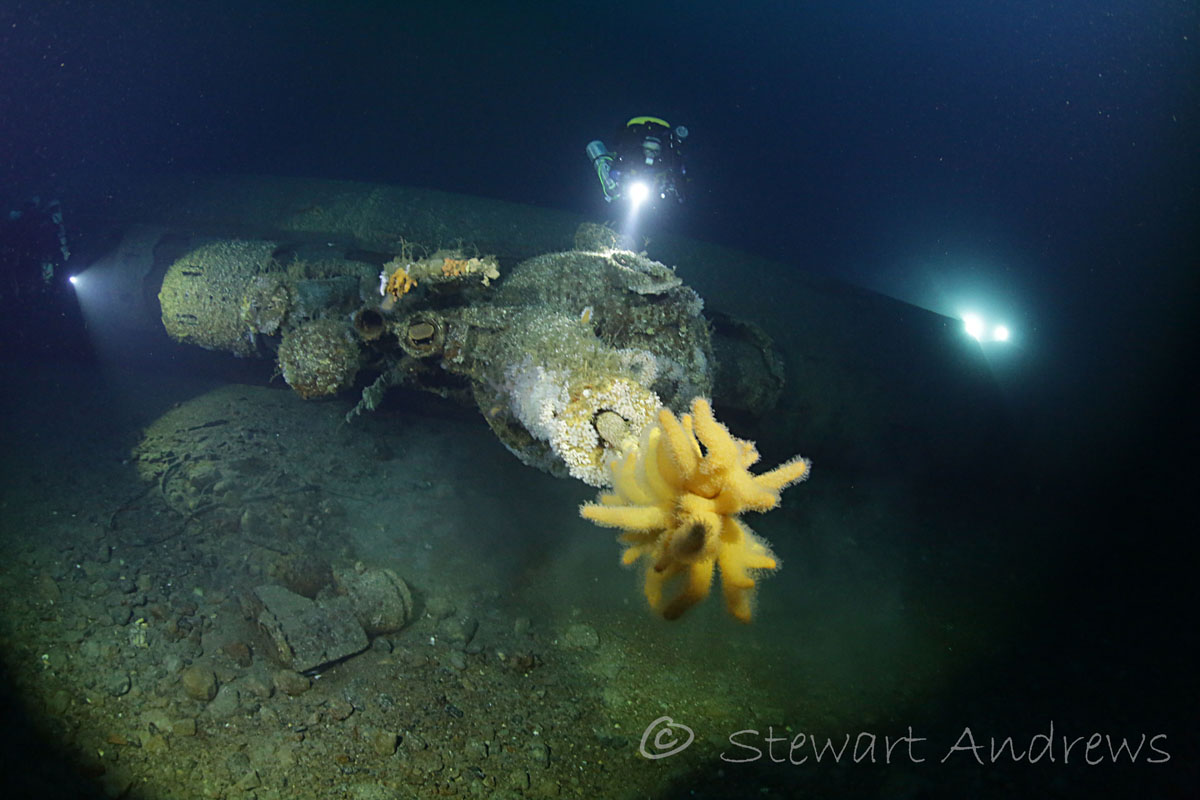
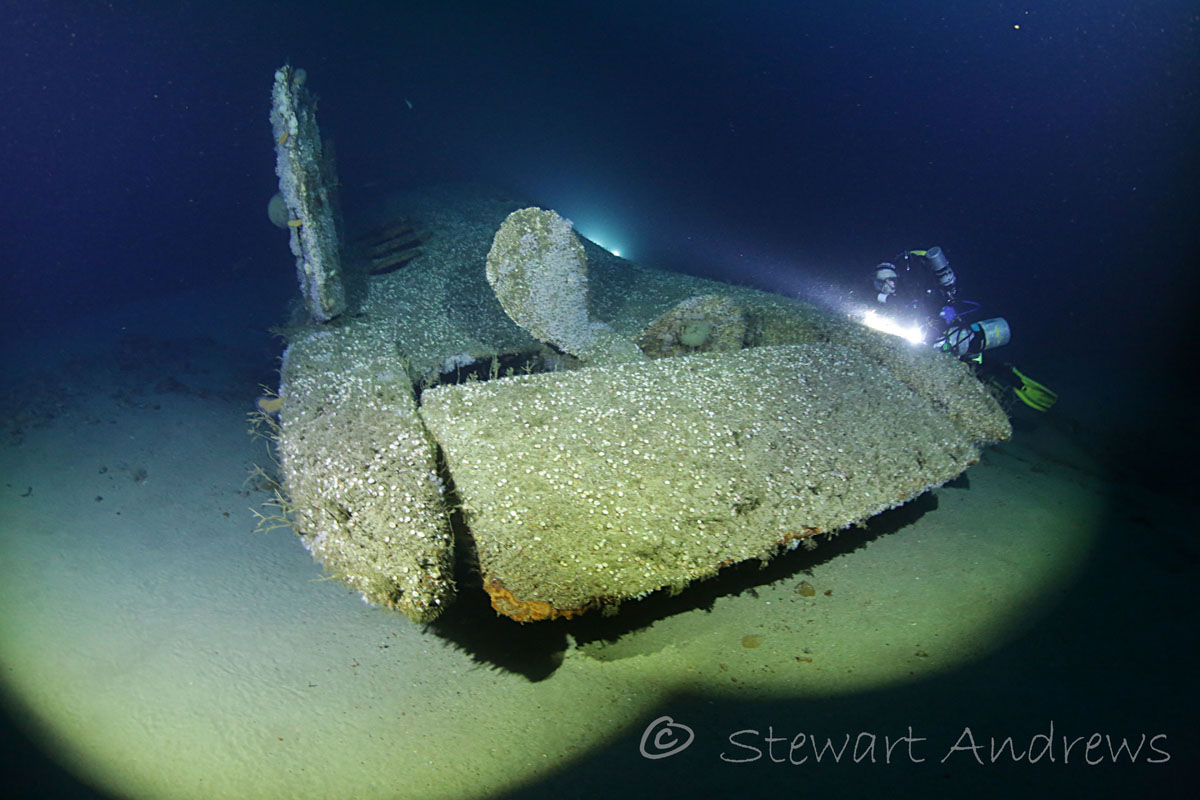
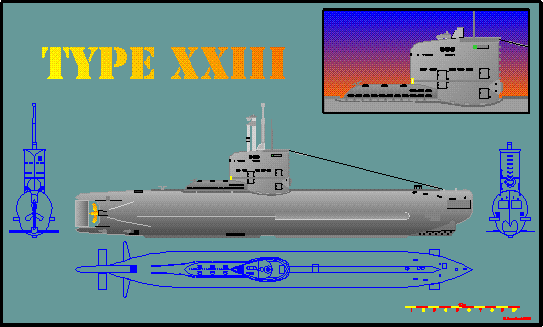
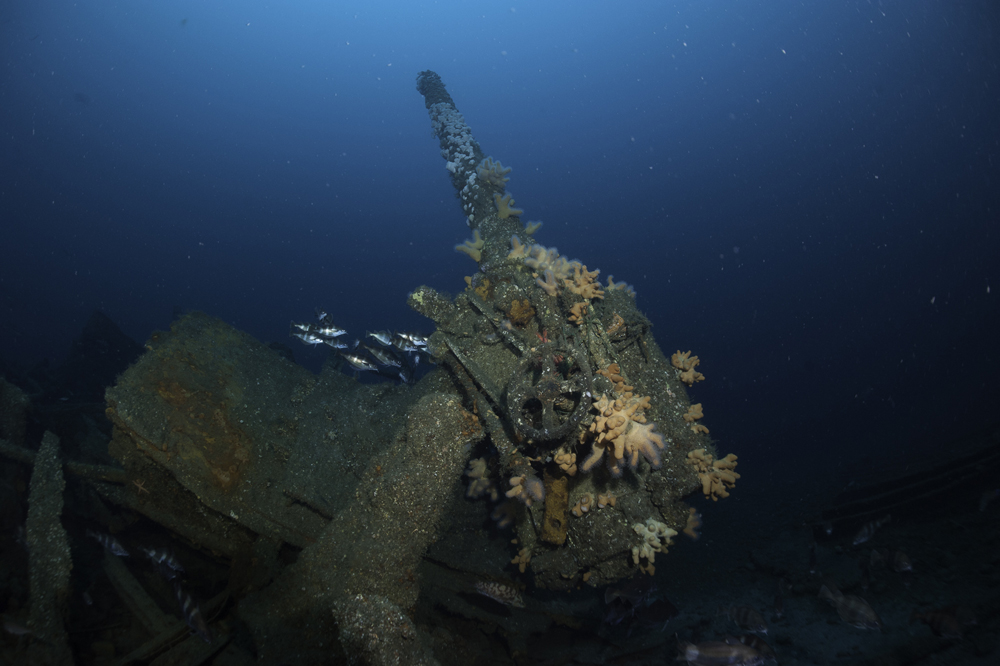
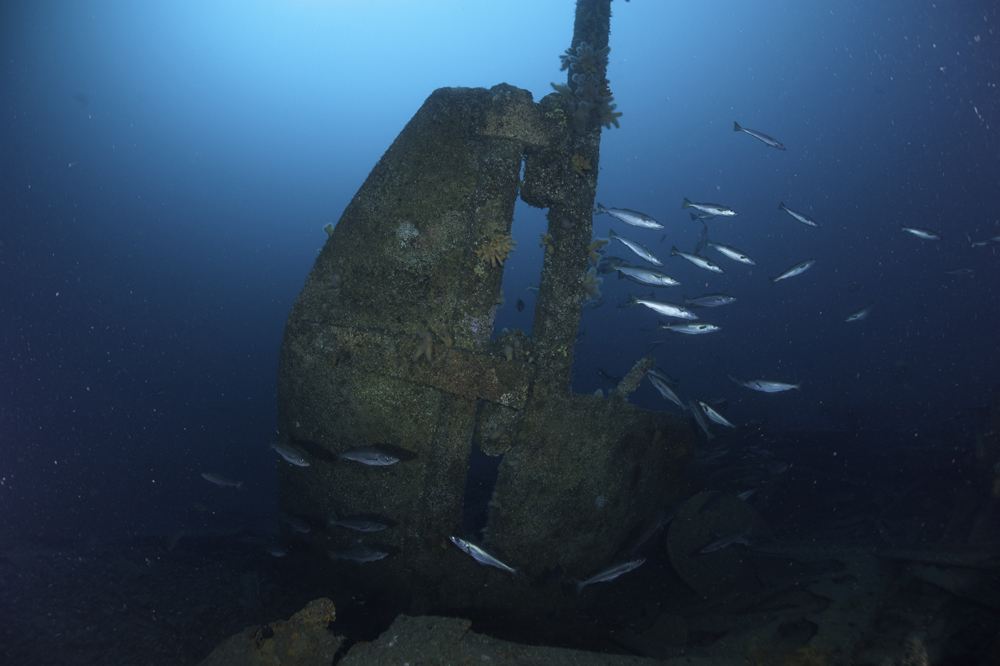
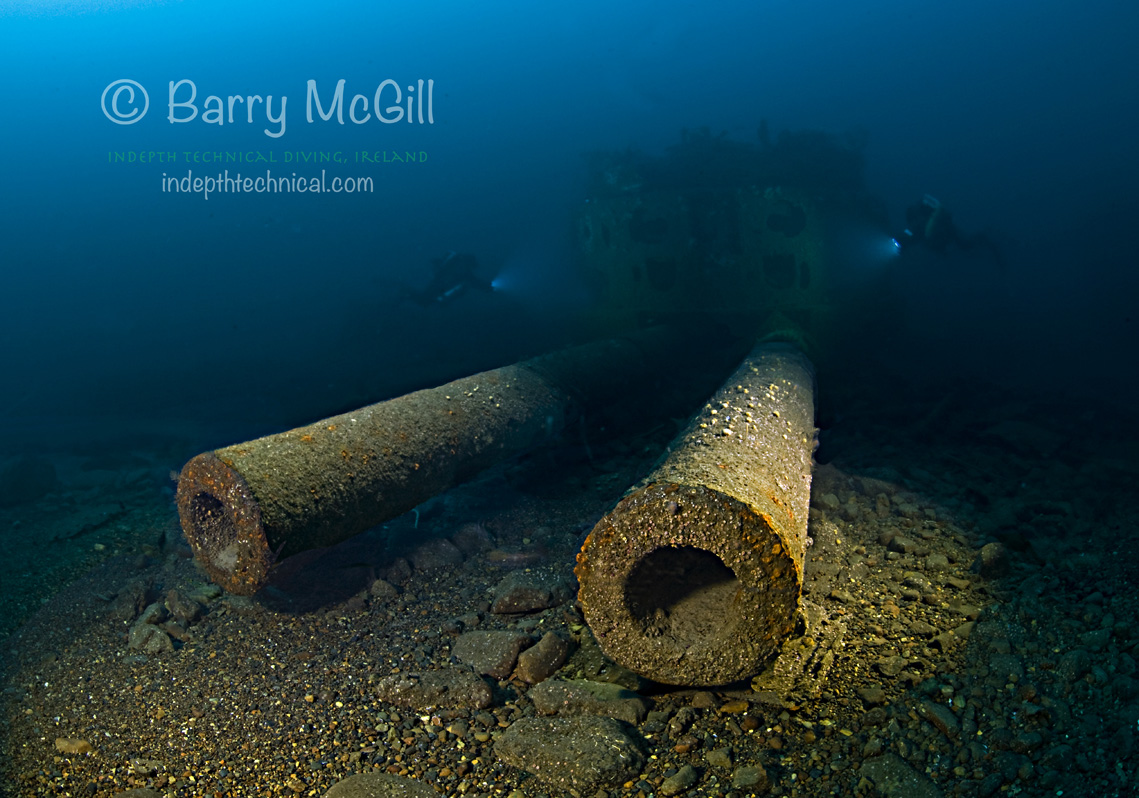
U-boat off Malin Head had less than 2 metres vis – my personal view is that the weather has been mixing the bottom up and that was the problem. Next day on the Viknor the vis was 15m, so pretty normal for this time of year. Temp at surface 10 degrees.
The Rosguill has for 2013, had the addition of a door for diver’s entry to the water and an extension to the gunnel for re-embarkation. All divers who have used the door have commented on the ease of use.
HMS Audacious was the target for a group of Irish divers who took advantage of a break in the weather. Vis 15m and temp on the surface of almost 10 degrees. Nice comfortable start to 2013.
What the rest of 2013 holds is, as always, a mystery – everyone hopes for no more Red Tide – but there is no doubt that there will be some great dives done – Watch This Space!!!
2012 ended with a dive on the Laurentic – 20m vis and reasonable light. Back to normal practically. Link here to a video taken by one of the divers – http://www.youtube.com/watch?v=5OHg-kSw13w&sns=em
This year will never be forgotten in the minds of many divers who experienced the Red Tide – the wrecks of north Donegal had gone from hero to zero in a season.
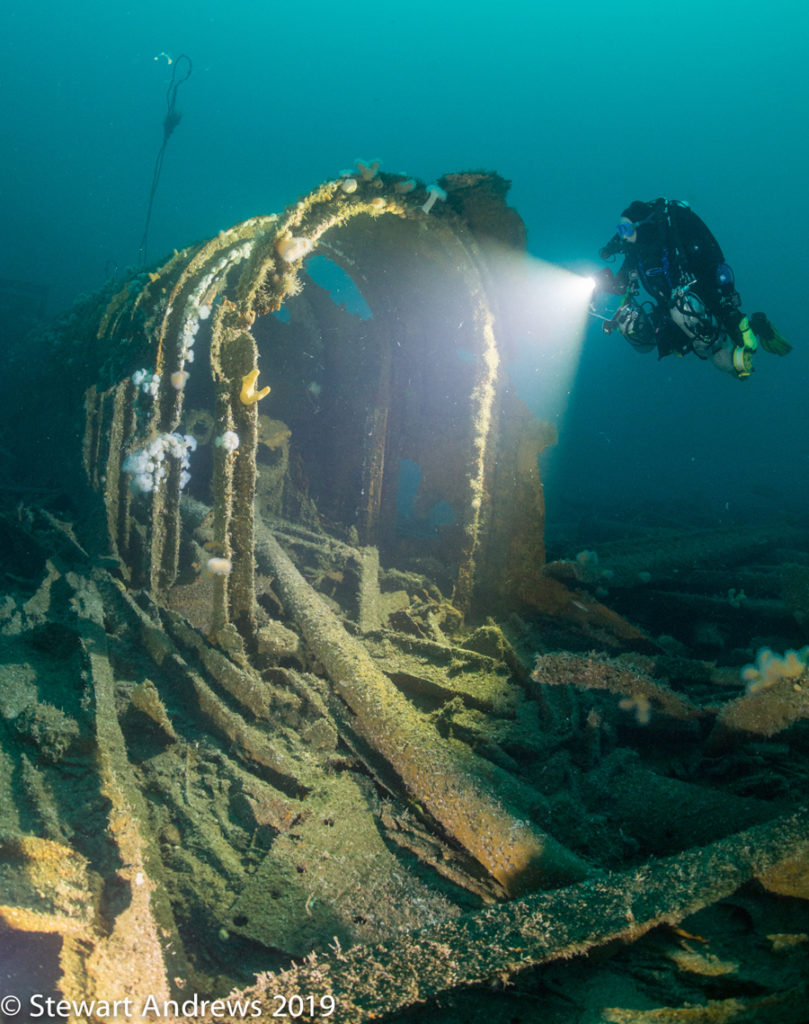
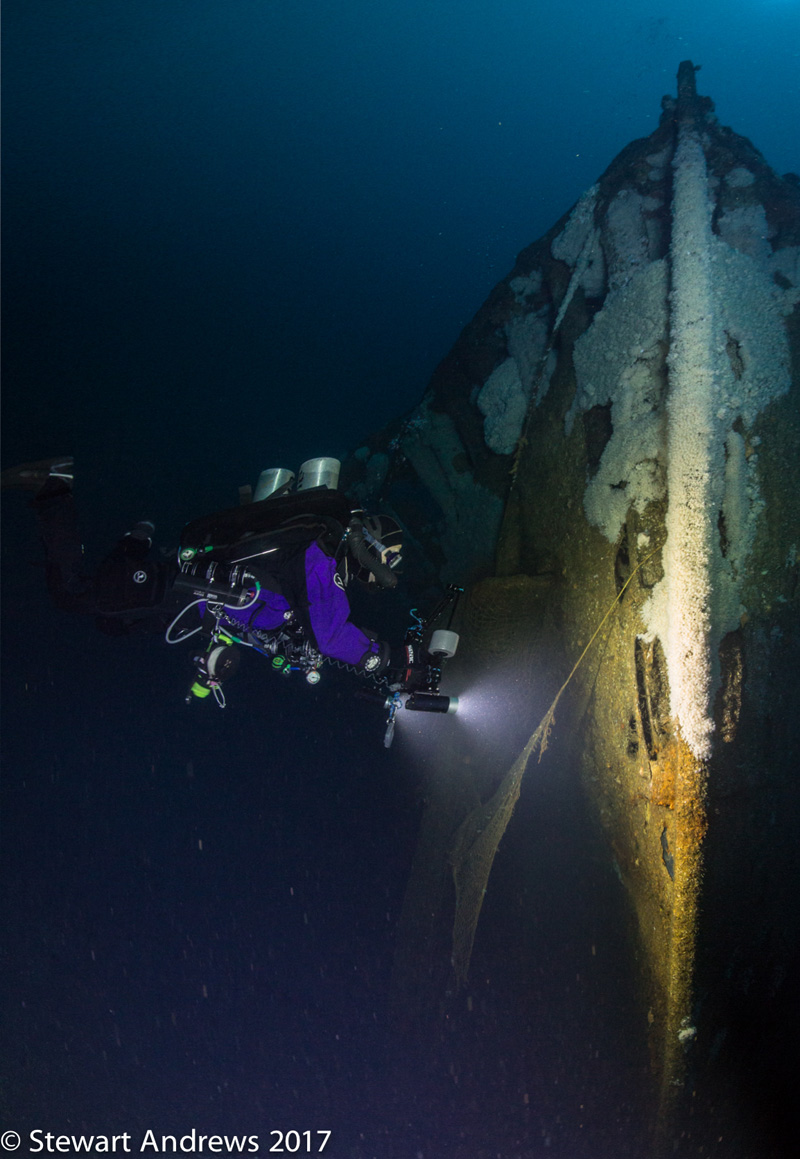
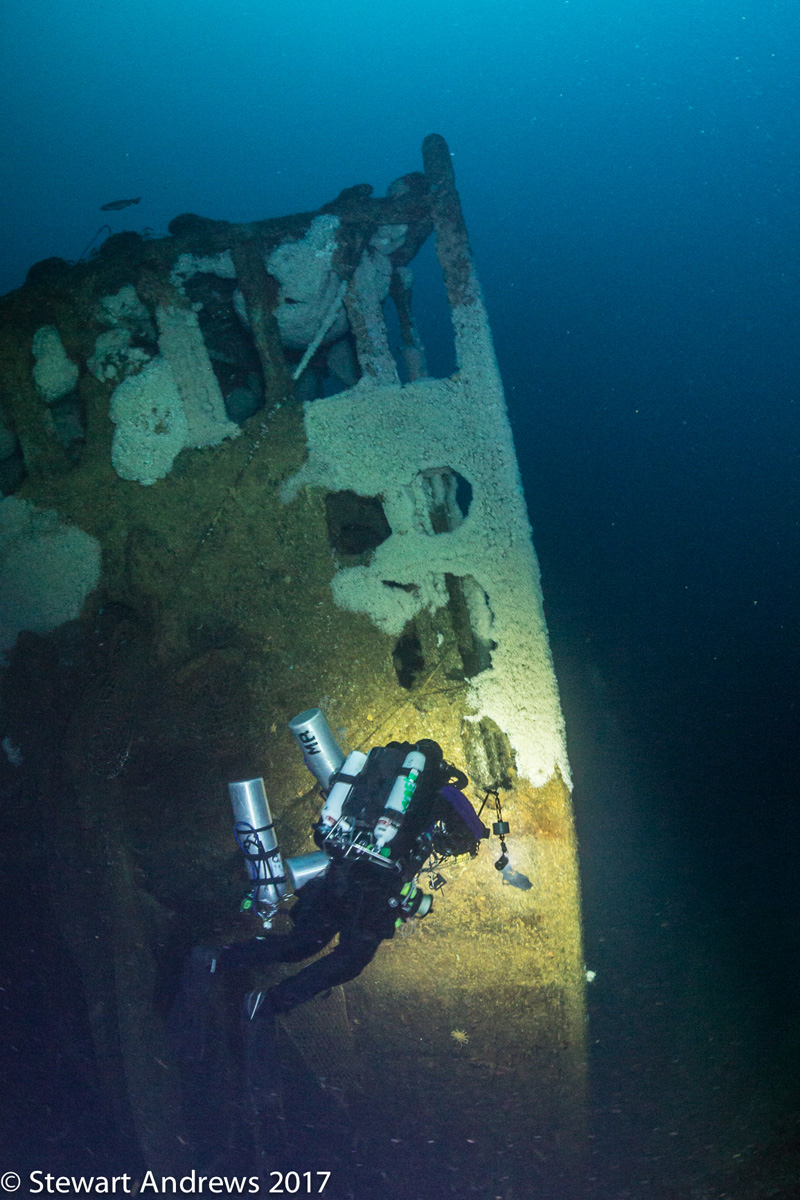
However, there were as always, some notable highs. Empress of Britain @ 160m was a real biggy. 5 dives on HMS Hurst Castle another great. Assyria at 140m another achievement. U 1003 was the first WW2 war loss u-boat which I had dived. Carinthia dived twice.
The other insideous happening was the ubiquitous use of video cameras, brought about by the GoPro and its housing & aided by Cathx lighting.
2013……………………………..who knows, but there are great wrecks & great dives awaiting.
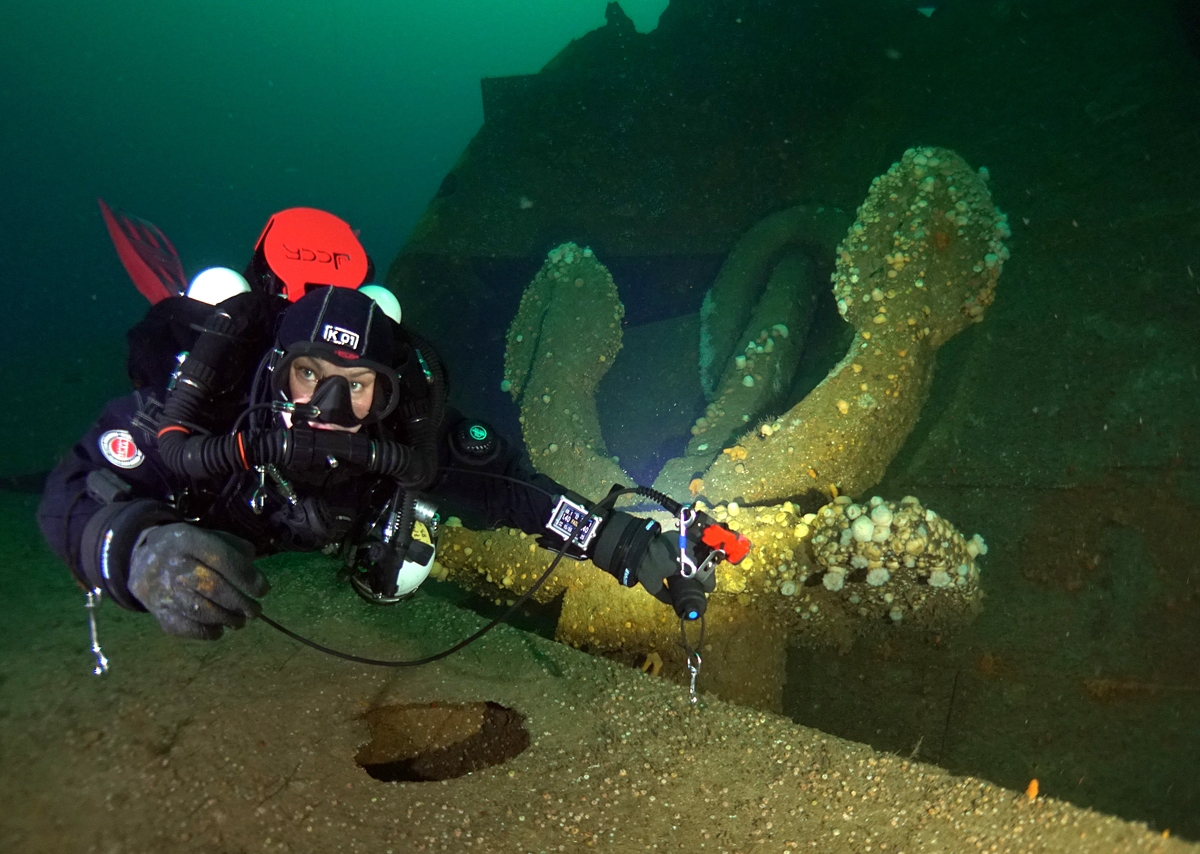
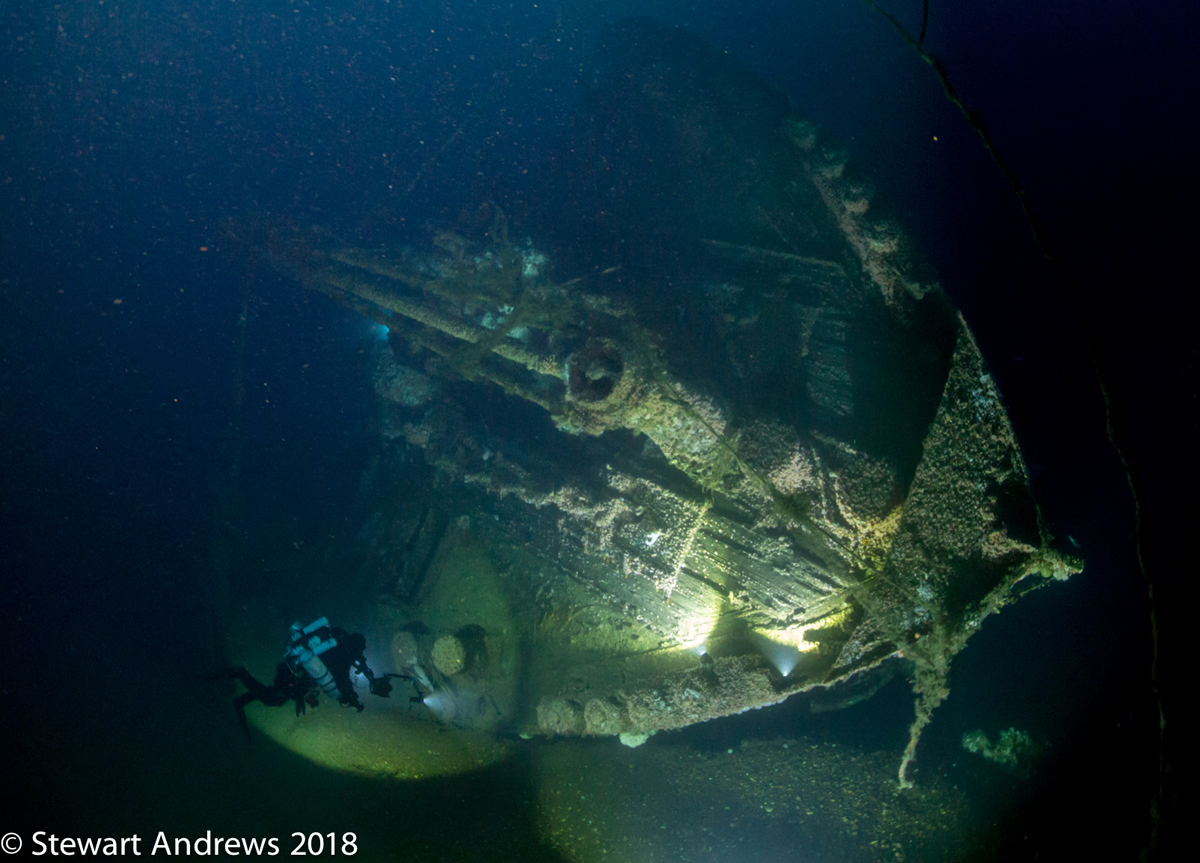
First dive by a group of Irish divers on the largest merchantman ever sunk by a U-boat. Lying far to the west of Tory Island in 160m, this leviathan was over 42k tons, 237m long. Other info on wikipedia – http://en.wikipedia.org/wiki/RMS_Empress_of_Britain_(1931)
Congratulations to the dive team headed up by Barry McGill and including Stewart Andrews, Paul Tierney & Rez Soheil. Support by Stephen McMullan and Kevin McShane.
The wreck was shotted on the bow within a few metres of the anchor, enabling the team to examine the whole bow area. Stewart also videod the dive.
View on the sounder showing the bow section to the left and the stern section to the right
Check out this super diver – amazing video where he not only finds and lifts a bell but videos himself doing so.
To any young aspiring diver watching this – please do not be disheartened – if you work really hard and get lots of luck, you may be able to attain up to 90% of the skills of this super duper diver.
NEWSW RELEASE FROM MARINE INSTITUDE – http://www.marine.ie/home/aboutus/newsroom/pressreleases/UpdateonNorthWestAlgalBloom.htm
Update on North West Algal Bloom
The bloom that has been affecting areas of the North West from Mayo to Donegal and at lower concentrations down along the rest of the West coast continues to impact on coastal marine life in several areas.
Mr Joe Silke of the Marine Institute stated today “The bloom that reported by the Marine Institute in the North West over the past two weeks, has shown some signs of increase along the west coast in the past few days. We started to detect low levels of it in the water from late May, but in the past two weeks it developed into a dense bloom in parts of the north-western counties from the Mayo to Donegal area.
In the past week high levels have been detected in Galway Bay, but no mortalities have so far been reported in this region. In Donegal the bloom was so dense that there were many reports of discoloured red or brown water in some areas and several areas have reported dead marine life washing up on the shoreline requiring Local Authorities to close certain beaches.”
This is a one of several microscopic algae that occur naturally in coastal waters, this particular one is called Karenia mikimotoi. Dead fish on Rossnowlagh Beach Photo:Paddy Ennis While the algae is not harmful to humans it did result in large numbers of dead fish including turbot, flounder, scorpion fish and shore rockling in Inner Donegal Bay. Other dead species were worm pipefish, lesser weavers, grey gurnard, shanny, sand goby, pollock, sole, plaice, flounder and dabs which have been washing up on Rossnowlagh and Murvagh beaches and earlier this week red flags were raised. The Local Authorities took the decision to close both beaches in response to large numbers of dead fish but these restrictions have been lifted on Tuesday. The situation is being closely monitored by the Marine Institute and Donegal County Council who are both keeping the public informed as the situation progresses on their websites. Mortalities of marine organisms have also been reported from the Sligo and Mayo coastal regions.
Local sea anglers have reported low fish catches along the Donegal coast, and in some areas a complete absence of any fish. This is due to the bloom which fish will avoid when they can. Lobster and Prawn fishermen have also reported very poor catches in the Donegal area. Oyster farms in Donegal also were reported to have suffered losses of up to 80% of stocks in some areas.
Mr Silke explained “The bloom affects species that live on or near the sea bed so we are seeing flatfish, lugworms and some shellfish getting washed up on the beaches. It is a natural bloom which we have seen it to occur in several places over the years. It is believed that it originates offshore as a natural part of its summer life cycle, and gets concentrated up against the coast with tidal and coastal currents.”
Some indications that the bloom may be moving back out to sea were observed in the latest satellite images and modelling data, however cell counts of samples analysed in the Marine Institute today show that the bloom is still of the same density in the Donegal and Sligo regions as it was last week, but increased levels were reported in Galway Bay.
The Marine Institute’s monitoring programme will continue to sample and monitor the bloom and post updates on our website at marine.ie and on local radio.
Divers recently report that the water is clear for the top 6 meters or so, then very heavy plankton to 30 meters. One diver stated that the zooplankton seemed to be moving up from 20-30 meters to eat the phytoplankton in the upper layers. At any rate the plankton is so thick that although the water beneath 50 meters is crystal clear, there is absolutely no light – complete darkness. Divers also report fish on wrecks as being very lethargic.
The Rosguill fished wrecks yesterday and had some fish – really not great. The deep limeburner grounds fished OK for Whiting, Gurnards etc. Today we fished Tory – very poor – reef Pollack only a couple fish. Sand atrocious.
First time ever I witnessed a 3 pound or so Brill swim past the Rosguill around 10 centimeters under the surface. I can only guess why it was there. I reckon that there is so little oxygen on the seabed that fish have no energy or as in the case of this Brill move to the surface to breath. They certainly have no desire to feed. This is guesswork.
When will it end? The thick phytoplankton will be there until it dies or is eaten. Prognosis for the next few weeks is not good. After that is anyone’s guess.
A massive phytoplankton bloom has scuppered, for the meantime, the usual great vis & ambient light off north Donegal. Divers are getting almost complete darkness on wrecks due to a very dense bloom – on one dive a few days ago a diver could not read his wrist computer on the 6m bar – unbelieveable conditions for here.
See – http://www.marine.ie/home/aboutus/newsroom/pressreleases/ExceptionalAlgalBloomdetectedinNorthWest.htm
Only nature knows when it will clear – just hope sooner rather than later.
Mixed weather this season so far – this past 5 years the early part of the season has been settled and from June onwards more unsettled. This is different – hope for a nice summer.
Vis early was good followed by atrocious 2 metres on the Laurentic, but this past trip to the Justicia we had 20 metres, although a little dark due to the plankton.
Water temp on the botton at start of season was 8 centigrade, 9 on the surface – now 9 on the bottom and 10 surface.
On her last day’s work of the 2011 season the Rosguill has found HMS Hurst Castle in a little over 80m of water around 12/14 miles north of Tory Island.
HMS Hurst Castle was a British Royal Navy, Castle – class corvette of 1,010 tons built in 1943/1944 which were an updated version of the much more numerous Flower-class corvettes of the Royal Navy, and started appearing during late 1943. They were equipped with radar as well as asdic. On the 1st September 1944 she was torpedoed by German submarine U-482 and sunk. 16 men lost.
Diagram of wreck by diver below.
This is probably the last of His Majesty’s Ships to be discovered in my area off north Donegal. It is a really great find and I hope that in 2012 some photographs and video may be taken and be put online. Also, perhaps place a fitting tribute on her in memory of the men who lost their lives.
The mortar launcher in the diagram is very similar or the same as : – http://www.civilization.ca/cwm/exhibitions/navy/objects_photos_search-e.aspx?section=4-D&id=28&page=1
The torpedos are very similar to these: – http://en.wikipedia.org/wiki/File:Hedgehog_anti-submarine_mortar.jpg
Also see – http://uboat.net/allies/warships/ship/69.html
2011 will remain in the memory of most regular divers to north Donegal as the year in which the visibility never really attained its normal clarity. Sure, there were a few days when the water turned to blue gin, but not many. Hard to understand why?
Weather was great right up until start September and as of second half October remains unsettled.
The Rosguill had a relatively sucessful year, pinging 10 new wrecks and diving 5 wrecks not dived since Beasley. Bells recovered from Veronica and Roscommon.
2012 hope to continue diving some of the “virgins” and intend to spend time looking for HMS Hurst Castle.
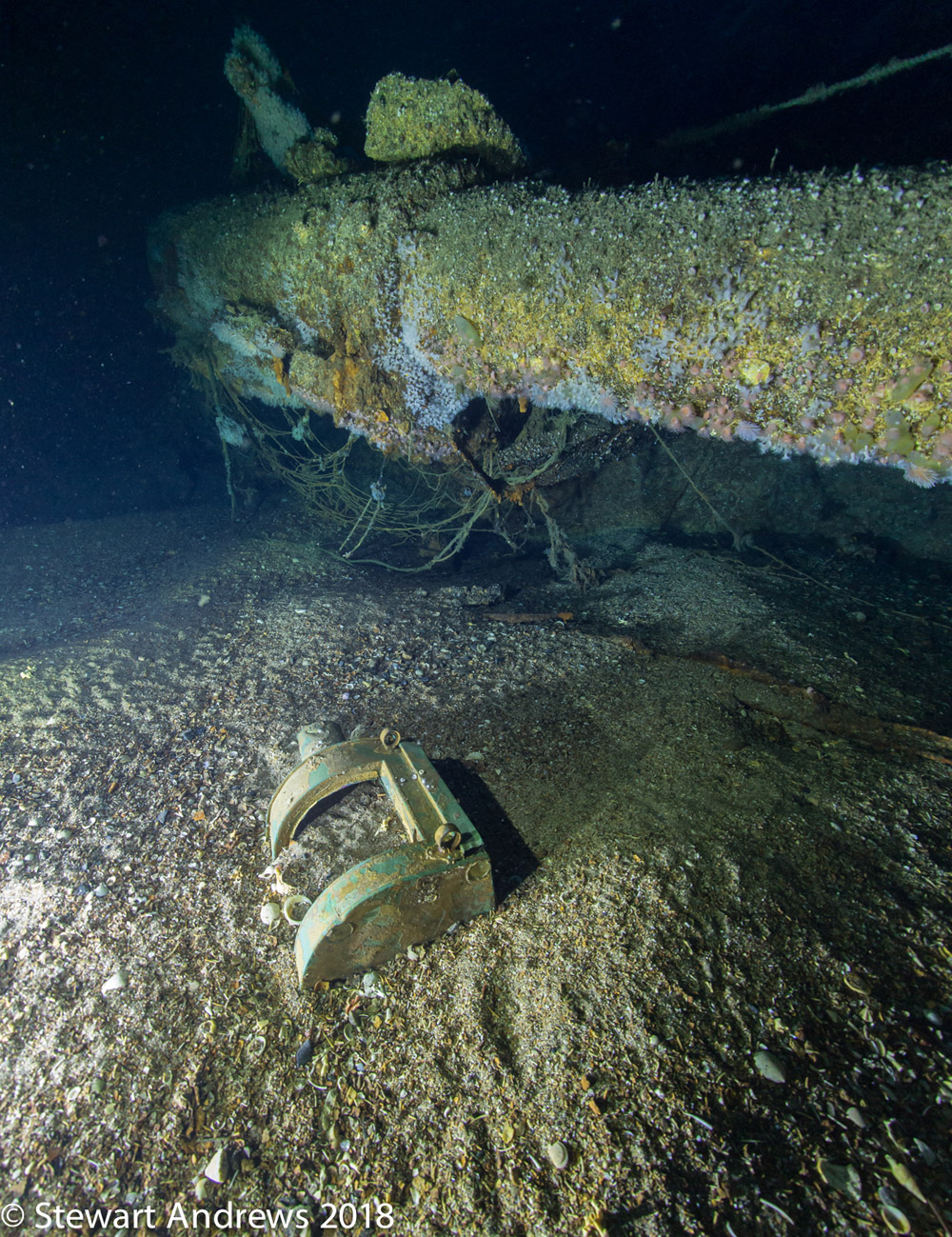
Few artefacts shown below from the SS Englishman, dived near the end of the season.